
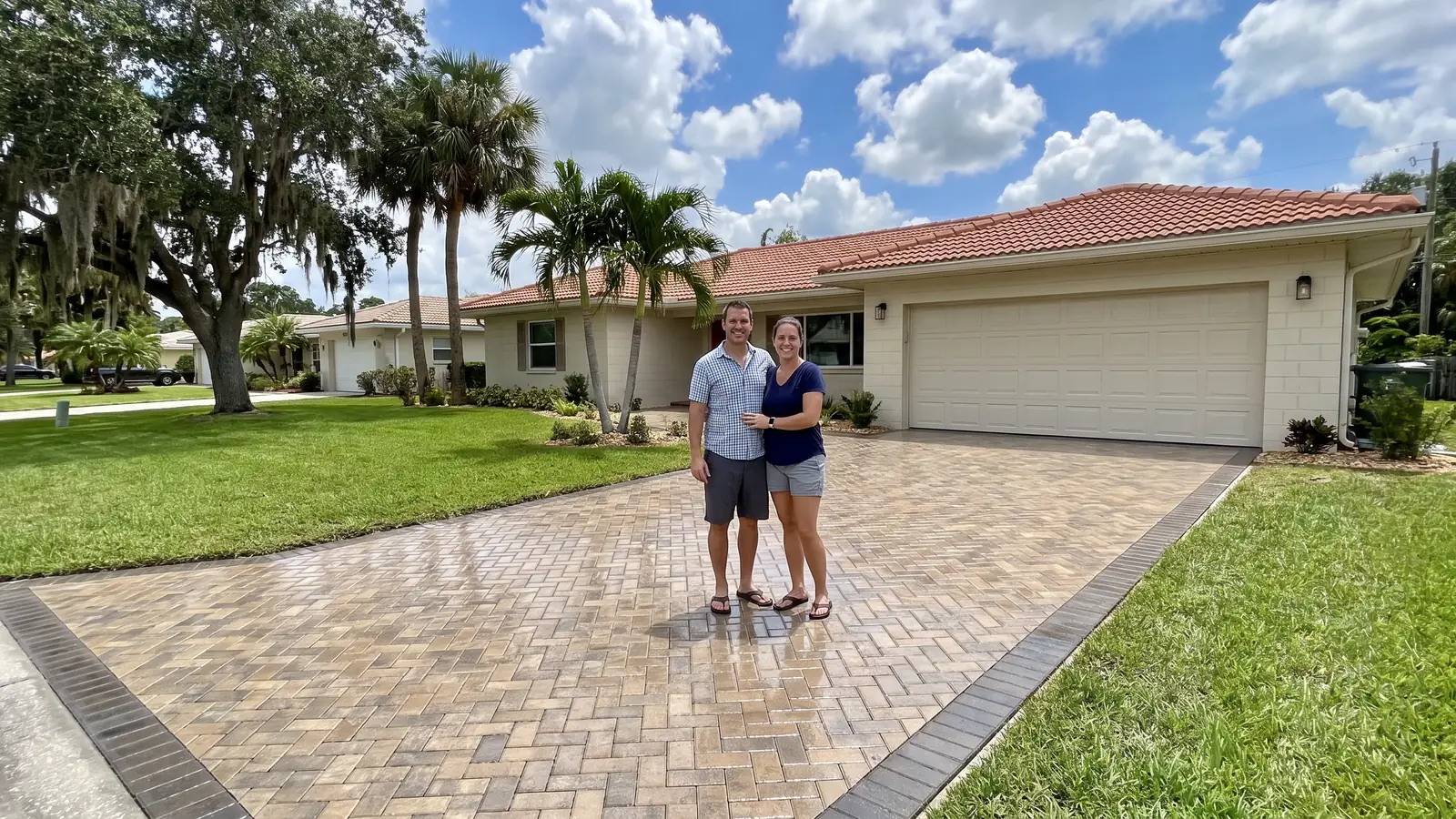
Paver sealing for Cocoa homes
Paver Sealing in Cocoa, FL
Shaded brick and older driveways in Cocoa can be sealed after a free estimate: call (321) 534-5093.
- Brings out deeper paver color
- Fresh joint sand helps lock pavers in place
- Gives weeds less room to grow
- Makes the surface easier to keep clean
- Free estimate, no obligation
Request a Free Estimate
Free, no obligation.
Fast, careful paver sealing in Cocoa
Cocoa homeowners can book paver sealing from the oak-shaded blocks around Cocoa Village to the neighborhoods out toward US 1 and I-95. Brick walks, driveways and pool decks can all be washed, re-sanded and sealed by a local contractor, starting with a free estimate. Once you ask for a free estimate, a contractor replies within 1 business day, usually much sooner.
Maybe the brick on your walk has gone green and slick, and the joints look more like gaps than lines. With a wash, new sand and sealer, the brick shows its own color again. Call (321) 534-5093, describe what you see, and ask anything you like before you commit.
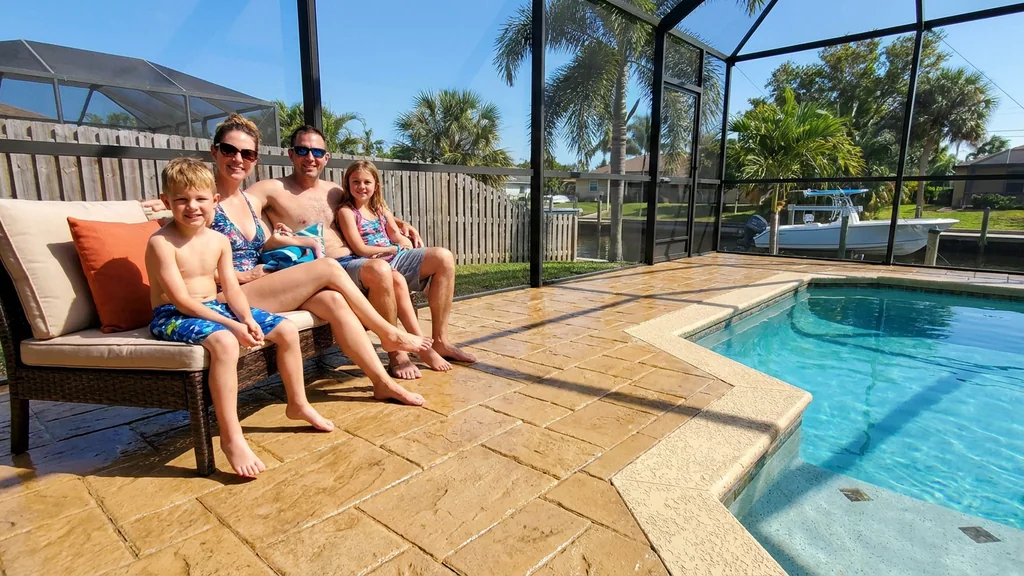
Why hire a local paver sealing contractor in Cocoa?
Cocoa has older homes, old oaks and a lagoon shoreline, and each one changes how a sealing job should go. A local contractor looks for those details first, and you can ask for a free estimate to hear how they apply to your house.
A free walk around
A contractor walks your Cocoa lot for free and quotes a price before any work is agreed. There is no obligation.
A range to check against
Companies on the Space Coast publish $1.85 to $4.00 a square foot for the whole clean, sand and seal job. Hold any Cocoa quote against it.
Finish for an older home
A natural finish keeps the soft look of older brick, and a wet look brings back depth in faded pavers. You choose.
Your call, always
You set the date and decide whether to go ahead. A Cocoa estimate carries no pressure and no hidden fee.
Get Your Free Estimate in Cocoa
Tell us about your pavers in Cocoa.
Free, no obligation
What paver problems show up most in Cocoa?
Oak shade that keeps brick wet
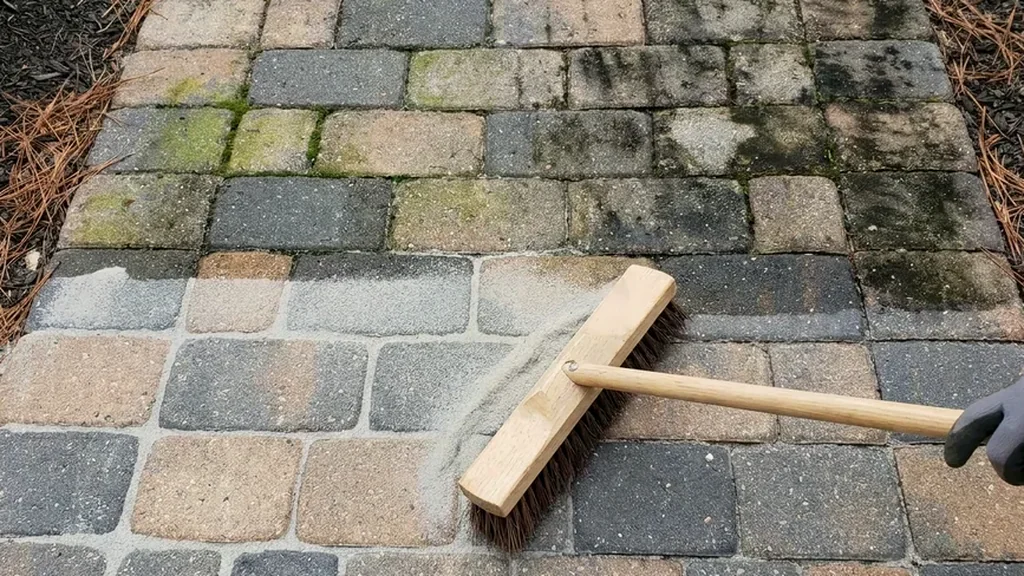
A Cocoa paver company points to the mature oaks around Cocoa Village, Provost Park and Diamond Square. It says the shade keeps pavers cool but damp, so they go green before the brick itself wears out. Shade also brings tannin stains near the curb. Sealer over green growth would keep it there, so the wash always comes first. Sweeping leaves off the walk often helps, since wet leaves feed the tannin stains. In heavy shade, that company says to schedule a cleaning between coats.
Older brick with an unknown history
Cocoa has a mix of older homes and newer neighborhoods, and its population rose from 3,098 in 1940 to 12,294 by 1960. Many driveways and walks here are decades old and may have been sealed more than once. If you are not sure what is on the surface, the contractor has to find out. Water-based and solvent-based sealers do not mix, so the contractor has to know which one is on your brick. A past owner may have chosen a wet look or a natural finish, and matching it keeps the surface even. A wash test on one corner can show how the old coat will behave.
Lagoon humidity and daily rain
Cocoa borders the Indian River Lagoon, and Brevard County holds 71 percent of that water. A Melbourne paver company says rain and humidity can wear sealer down much faster than dry air does. Summer storms are part of the pattern, since NWS Melbourne puts the typical wet season start near May 28. A coat on a Cocoa driveway may show age sooner than you expect. Early morning is when the surface is wettest, so afternoon checks tell you more about how a coat is holding. Ask the contractor how the forecast changes the plan.
Rust lines from a private well
Cocoa's water utility has served central Brevard since 1957, but plenty of lawns are watered from private wells. University of Florida extension says iron is common in Florida well water and shows up as orange streaks where that water irrigates. Check your driveway edge for rust in the spray path. Those marks need treatment before sealing. If your sprinklers use city water, rust marks are less likely, though a quick check of the spray path costs nothing. Adjusting the spray heads once the sealer has cured helps keep the new coat clean.
Thin joints and settled spots
Washed-out joint sand is one of the conditions a Brevard company lists as changing a sealing price. Open joints invite weeds and give pavers room to shift. A Cocoa company adds that sealing does not repair settled pavers or a failed base. Point out any low corners at the first visit, so they are checked before the coat goes on. Fresh sand does not last forever, so a glance at the joints each spring is a good habit. Fixing the base first costs more, but it keeps the sealed surface even for years.
Does paver sealing differ in Cocoa Village and the neighborhoods around it?
It can, since the oak shade is thickest near the village. Cocoa Village runs along Florida Avenue to Stone Street and reaches Riverfront Park on the Indian River. A Cocoa company names Provost Park and Diamond Square as shaded spots where pavers stay damp. If your walk is close to any of them, mention it when you ask for a free estimate.
Older houses call for a gentle eye on finish. The Porcher House on Delannoy Avenue, a coquina home finished in 1916, shows how long some Cocoa buildings have stood. A natural finish keeps the soft look many older Cocoa homes have, and a wet look suits faded brick that needs depth. Call (321) 534-5093 to talk through which suits your house.
Farther out, Cocoa spreads along US 1, which is Cocoa Boulevard, and toward I-95 at SR 520. Clearlake Road and Dixon Boulevard link the newer areas, and ZIP codes 32922, 32926 and 32927 cover the city. Tell the contractor your cross street when you ask for a free estimate, and the visit can be planned around it.
What does paver sealing cost in Cocoa?
On the Space Coast, companies commonly publish a price of $1.85 to $4.00 per square foot to clean, sand and seal. In Cocoa, the amount of shade growth and the state of the joints move a job inside that range. A bigger layout with a walk and a patio adds to the total. To get a price for your own Cocoa pavers, ask for a free estimate.
Old sealer is a real price factor, because a Brevard company says water-based and solvent-based sealers need different strippers. Stain treatment adds time too. A walk with moss, tannin marks and thin joints costs more than a clean, sunny driveway. Call (321) 534-5093, and the contractor can say which of those items fit your Cocoa lot.
| Paved area | Typical example | Clean, sand and seal |
|---|---|---|
| 300 sq ft | Small patio or walkway | $555 to $1,200 |
| 600 sq ft | Two car driveway | $1,110 to $2,400 |
| 1,000 sq ft | Large driveway or pool deck | $1,850 to $4,000 |
| 1,500 sq ft | Driveway plus pool deck | $2,775 to $6,000 |
Math based on the $1.85 to $4.00 per square foot that Space Coast paver companies publish. Your contractor sets the actual price after seeing the surface. Repairs, leveling and stripping failed sealer are usually extra.
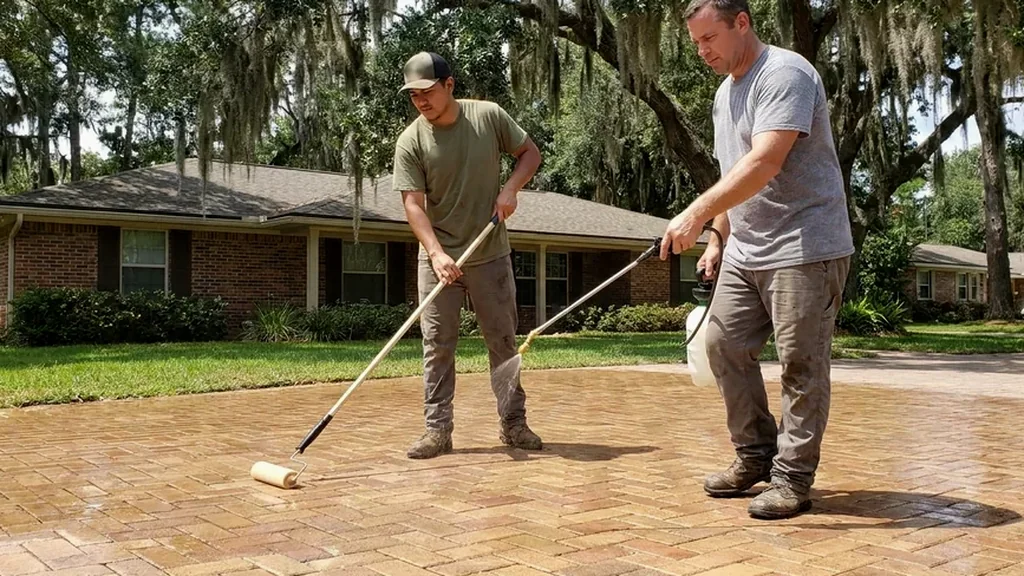
How does a paver sealing job work in Cocoa?
Look at the shade, the brick and the old coat
The contractor starts by checking how much shade your Cocoa pavers get and whether a coating is already there. Older brick is assessed for soundness, since a Cocoa company says sound older pavers can often be sealed. Settled spots are marked, because sealing will not fix a weak base. The old product is identified so the new one can be chosen to match. This first visit also sets what the quote includes. Taking photos of the problem areas helps both of you remember them.
Deep wash for algae, moss and stains
Cleaning takes off green growth, tannin marks and rust. In shaded yards this wash is the longest step. Sealer over algae would only hold it in place. Rinse water is kept off older masonry and planting beds where it can be. Wet brick can look worse before it looks better, so do not be alarmed by a patchy first rinse. The contractor may rinse in sections to keep the water from pooling.
Fresh sand in every joint
Washing pulls sand out, so the joints are refilled and settled. Weeds that moved in while the sand was low are cleared first. A local company notes that sealing does not stop weeds permanently, but full joints give them less room. Expect this stage to take longer on old walks. A narrow village-style walk is quick to refill, while a wide drive takes longer. Joint sand that is full and level also helps pavers stay locked together.
Let the surface dry out
A Cocoa company says pavers usually need 24 hours or more to dry after washing. Shaded brick under the oaks may need longer. The contractor checks the forecast and the surface before going on. Waiting beats sealing damp pavers. Humid mornings under oaks can stretch the wait well into the afternoon. That patience is the difference between a clear coat and a cloudy one.
Two coats, then time to cure
Sealer goes on in your finish, typically in two coats. Allow at least 24 hours to cure, a Cocoa company says, so keep cars and feet off until told. Recoating is generally recommended every two to three years, and heavy shade may call for a wash between coats. Ask for the product name in writing. Skip parking on the driveway until the crew lead says it is safe. After that, a light sweep now and then keeps grit from scuffing the finish.
Complete paver services in Cocoa
A Cocoa job starts with a deep wash to lift algae, moss and stains. New joint sand follows, then a drying period, usually 24 hours or more according to a local company. Sealer goes on last, typically in two coats. To ask how those days would fit your week, call (321) 534-5093.
Brick driveways and village-style walks wear in different ways. A shaded walk goes green first, while a sunny drive fades and loses sand. Pool decks and patios behind older houses may need a finish with grip. When you ask for a free estimate, say if you have brick, concrete pavers or a pool deck.
Finish is the big choice. Wet look restores depth in faded brick and adds a light shine, while a natural finish keeps the softer matte look of an older house. A wet look also shows scuffs sooner, so think about daily use. Call (321) 534-5093 and ask to see samples if you are unsure.
Timing in Cocoa follows the rain. The typical wet season starts near May 28, and the drier stretch begins around mid October. Pavers need a dry surface, and sealer needs at least 24 hours to cure. To find a window that fits, ask for a free estimate.
Questions to ask before you hire
- Do you check that the pavers are dry before sealing, given how often Brevard gets afternoon storms?
- Is the pool deck sealed with a non-slip finish, and what does that add to the price?
- Can I read the product label before the sealer goes on?
- What should I check on the pavers the day after the job, and who do I call?
- If a section of pavers has settled, will you reset it or seal right over it?
- Does living near the ocean or the Indian River lagoon change the sealer you pick?
- How will you protect my screen enclosure, shrubs and flower beds from overspray?
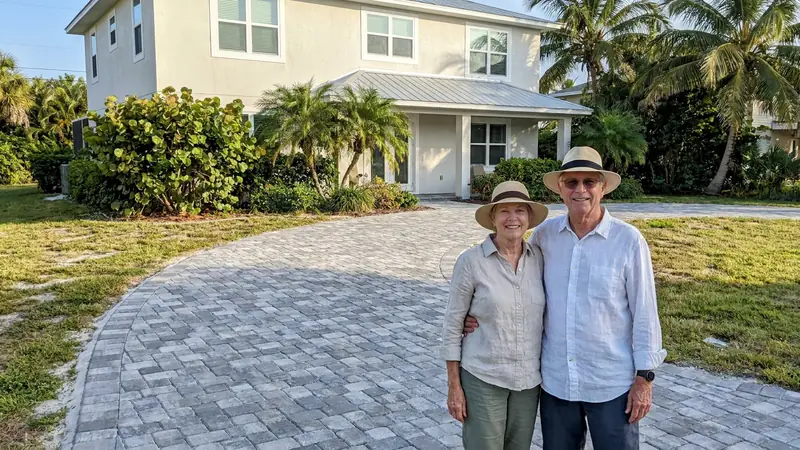
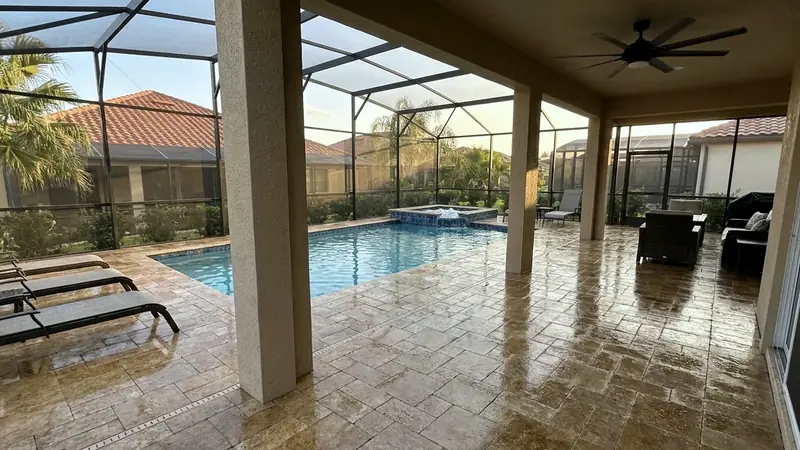
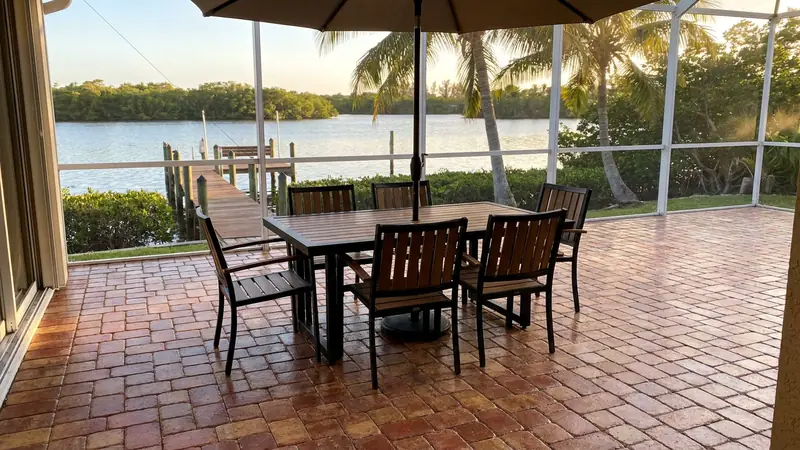
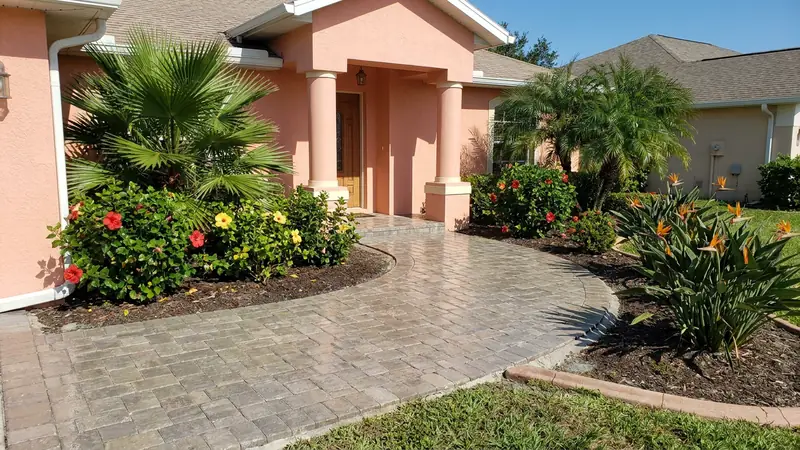
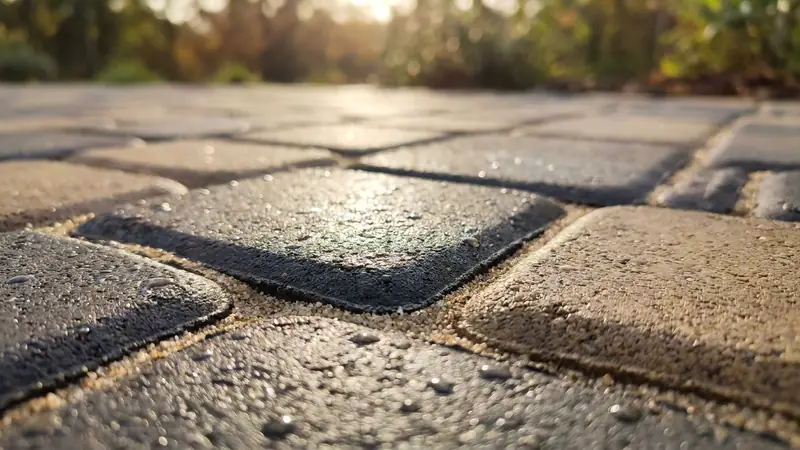
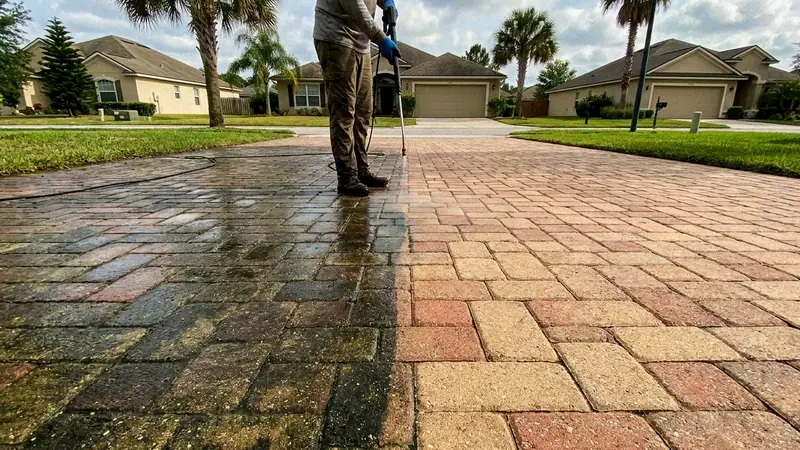
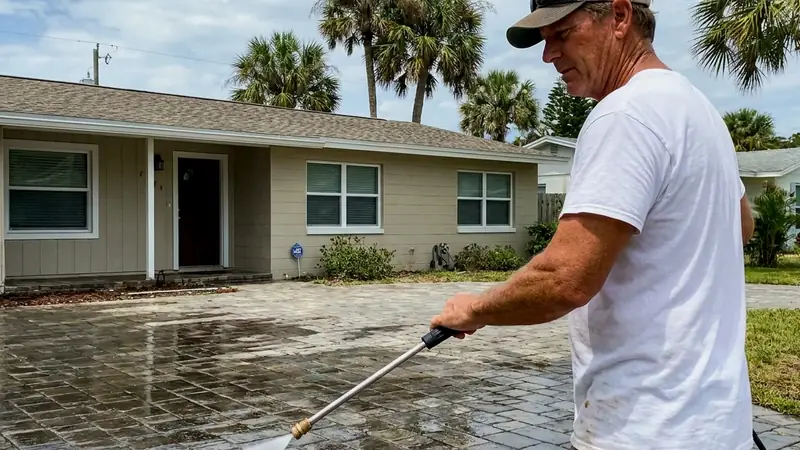
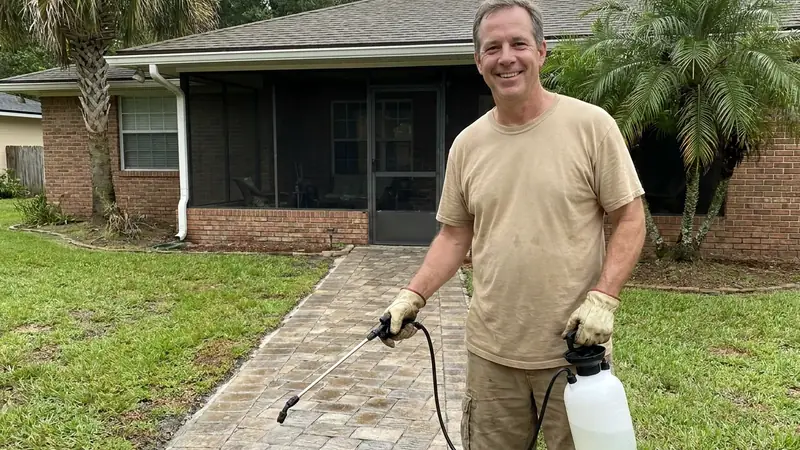
What do sealed pavers look like around Cocoa?
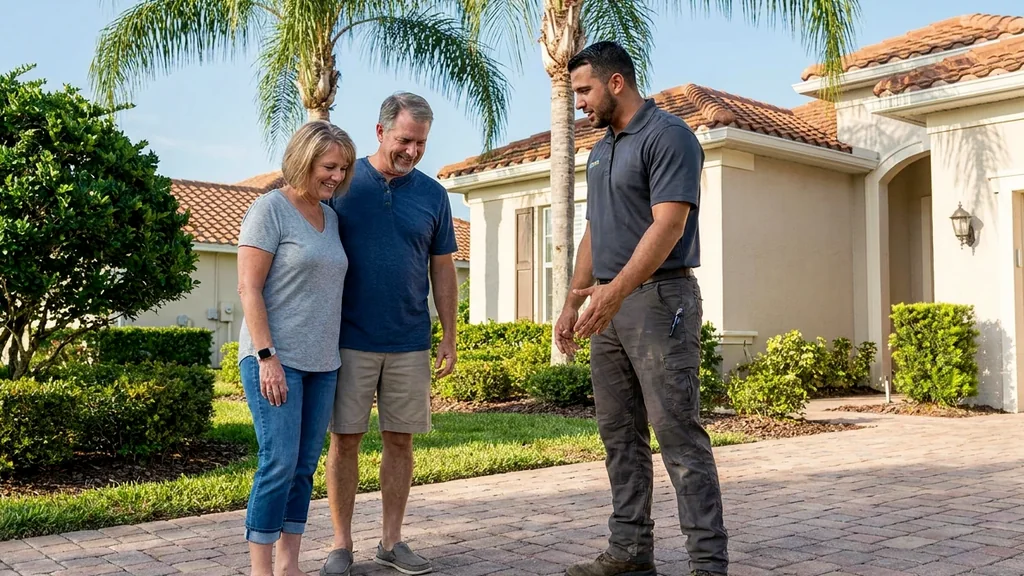
Why local matters in Cocoa
A contractor who works Cocoa knows the village blocks are shaded and the outer streets are not. That changes how long a wash takes and how long the surface stays damp. Someone unfamiliar may bring one plan to both. For a contractor who understands that difference, call (321) 534-5093.
Local knowledge also helps with age. Cocoa grew quickly after the space industry arrived, so its housing runs from historic homes to newer streets, and a nearby contractor has likely seen pavers from several of those eras. You can ask for a free estimate and say roughly when your house was built.
Storms matter as well, since summer afternoons bring heavy rain along the lagoon. A local contractor builds that into the schedule and starts early on dry days. That helps you avoid a half-finished job. Call (321) 534-5093 and ask how storm delays are handled.
What makes Cocoa different from other Brevard County towns?
Cocoa dates back to the 1800s on the Space Coast, with S.F. Travis Hardware opening in 1885 and the city chartered in 1895. A fire in 1890 and the Great Freeze of 1894 and 1895 hit early on, and the Historic Cocoa Post Office, built by the WPA in 1939, still stands near the village. If you live near it, ask for a free estimate and mention your street.
Cocoa also holds the highest point in Brevard County, at 83 feet above sea level. The Humphrey Bridge carries drivers across the lagoon to Merritt Island, and Riverfront Park sits at the end of Cocoa Village. The Porcher House, built in coquina in 1916, ties the town to its citrus past. Call (321) 534-5093 to book a visit anywhere in Cocoa.
Frequently Asked Questions
What is the average cost to seal pavers in Cocoa?
On the Space Coast, companies commonly publish a price of $1.85 to $4.00 per square foot to clean, sand and seal. Shade growth, old sealer and thin joints move a Cocoa job around inside that range. Ask for the measured square footage in the quote, which keeps any comparison fair. Ask whether the quote includes washing, new sand and any stain treatment, since some bids list them separately. Quotes that name the product make the comparison easier.
What are the downsides of sealing pavers in Cocoa?
Two downsides stand out, upkeep and timing. A coat wears thin and needs renewing, wet look scuffs faster than matte, and nothing can be sealed while damp. Sealing also cannot repair settled pavers or stop weeds for good. The cost of a redo is also worth weighing, which is why prep matters more than the sealer itself. Weighing those against the protection a coat gives is a fair way to decide.
Is it good to seal pavers in Cocoa?
For most homes, yes. Sealer helps lock in color and joint sand, and a local company says recoating every two to three years keeps older brick looking even. Heavy oak shade means a wash may be needed between coats. A walk-through at your own lot is the surest way to judge what is realistic for your brick.
Should I seal pavers under oak shade in Cocoa?
Yes, once they are washed clean. A Cocoa company says shaded pavers stay damp and go green before the brick wears out. Sealer over green growth would keep it, so the pavers must be cleaned and dried first. Heavy shade also means a wash between coats, per a local Cocoa company, so plan on that.
What finish should I choose to seal pavers on an older Cocoa home?
A natural finish suits many older Cocoa homes, since it keeps a softer matte look. A wet look restores depth in faded brick but shows scuffs sooner. Ask the contractor for a sample patch if you cannot decide. Samples help, since a finish looks different under oaks than it does in full sun.
How long should I wait after washing before I seal pavers in Cocoa?
A Cocoa company says pavers usually need 24 hours or more to dry. Shaded areas may take longer. Sealer needs a dry surface, so the contractor will check before starting. Humid mornings can add hours, so the contractor may start later than you would guess.
How long do you stay off pavers after sealing in Cocoa?
Give sealer a minimum of 24 hours to cure, according to a Cocoa company. Ask your contractor for the exact stay-off time for the product used and the weather that day. Keep cars and feet off until told it is safe. Rain on the second day can still be a problem, so ask what the plan is if a storm moves in.
Can older brick pavers in Cocoa still be sealed?
Often they can, if they are sound. A Cocoa company says older pavers can usually be sealed after their condition is checked. Settled or broken pavers should be repaired first, since sealing does not fix a weak base. Mention any cracked or lifted brick when you ask, so the plan covers repairs first.
Ready for a Free Estimate in Cocoa?
Call (321) 534-5093 and tell us about your pavers.
Free, no obligation